Who in your business knows the markup on a supplier invoice before it is approved, not after the month closes? If the answer is no one, that is a problem.
Under Support at Home there is no package management fee. The markup on each service pays for the work around it: organising the service, checking the invoice, claiming it and paying the supplier. The care team organises the service, finance processes the invoice, and the markup can sit in between with nobody looking at it.
Where markup leaks
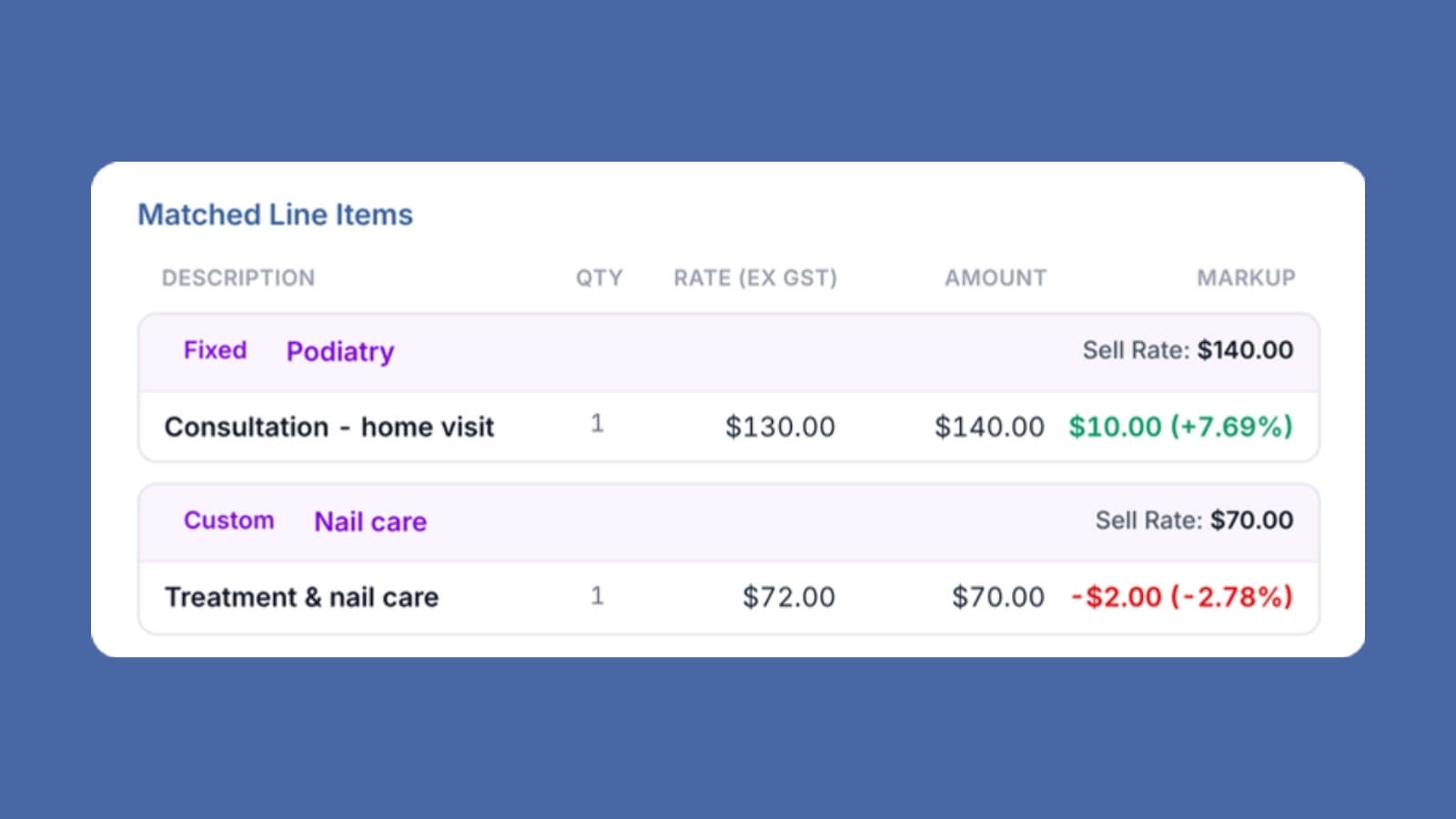
It rarely goes in one big line. A supplier puts their rate up and the client price stays where it was. A price entered by hand comes in below cost. An assistive technology line goes over the AT-HM markup cap. A below-cost line can hide inside an invoice that looks healthy overall: a $10 markup on one line and −$2 on another still total $8. By the time it shows in a report, the supplier has been paid and the same rate has gone through on every visit since.
What Invoice Harbour does
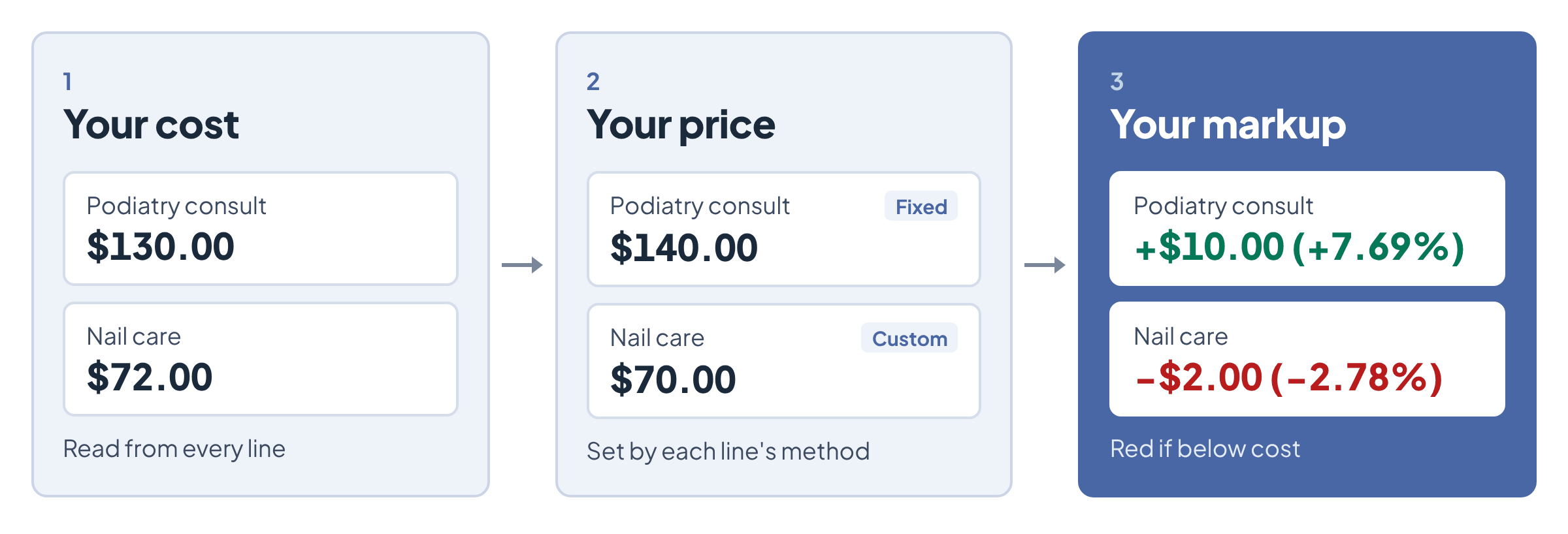
The supplier's rate is read from every line as your cost. Your price is set by the line's pricing method: your fixed service rate from the care platform, the cost passed straight through, your overhead and loading applied to the cost, or a price entered by hand. Each line shows its markup in dollars and as a percentage, and the whole invoice rolls up to one figure.
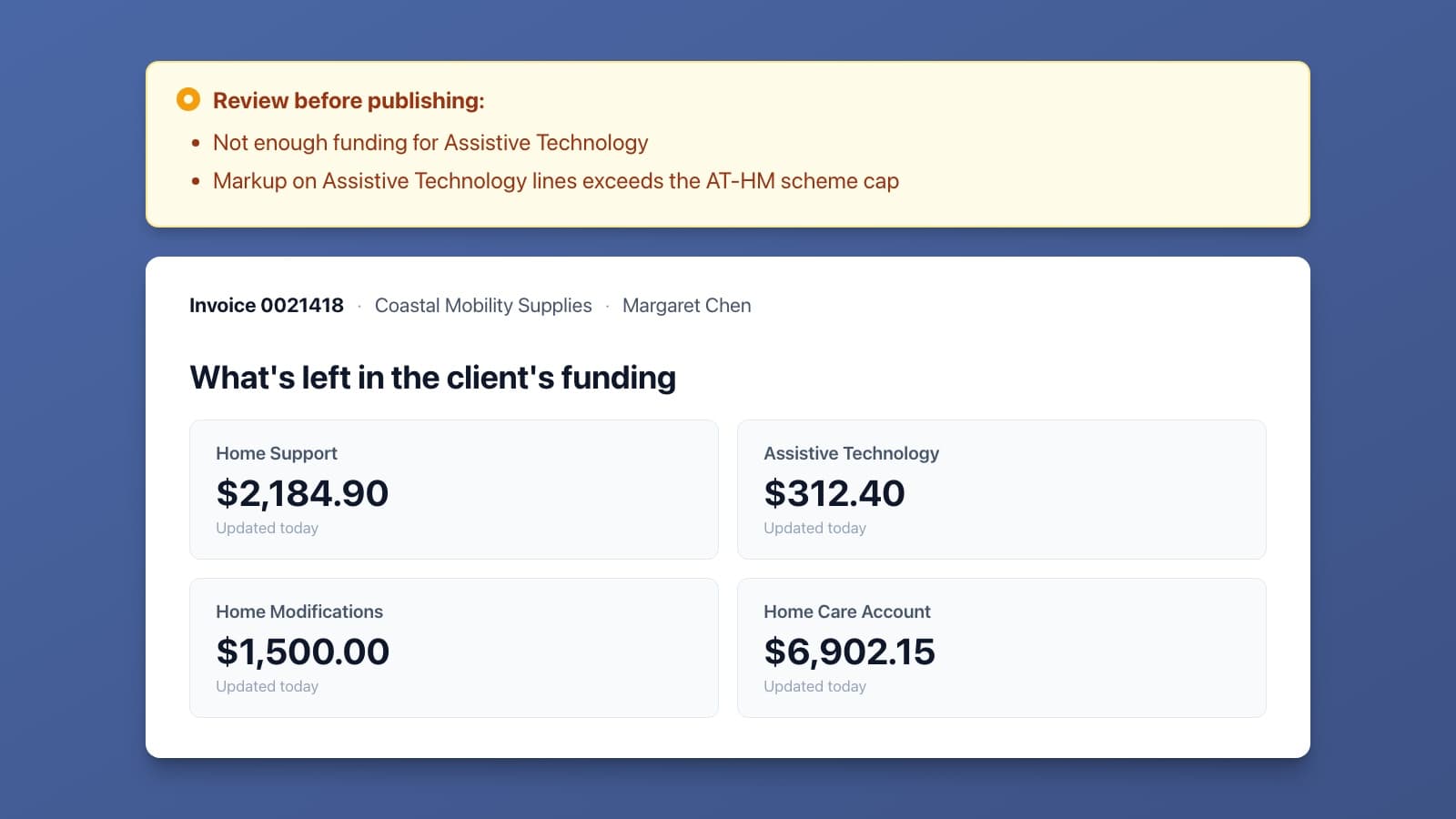
A line below cost shows in red, so it can be fixed before anyone approves it. Assistive technology and home modifications lines are also checked against the markup cap. The service margins page shows each pricing method, and Funding and AT-HM markup, now checked before you approve covers the cap.
Every dollar of markup that slips is margin the business does not get back. Geoff Doherty, owner of 101 Home Care, put it plainly:
"As a business owner, we're always looking for efficiencies, because efficiencies increase your margins. That's never been as important as it is now in the aged care sector, where everything is being tightened."
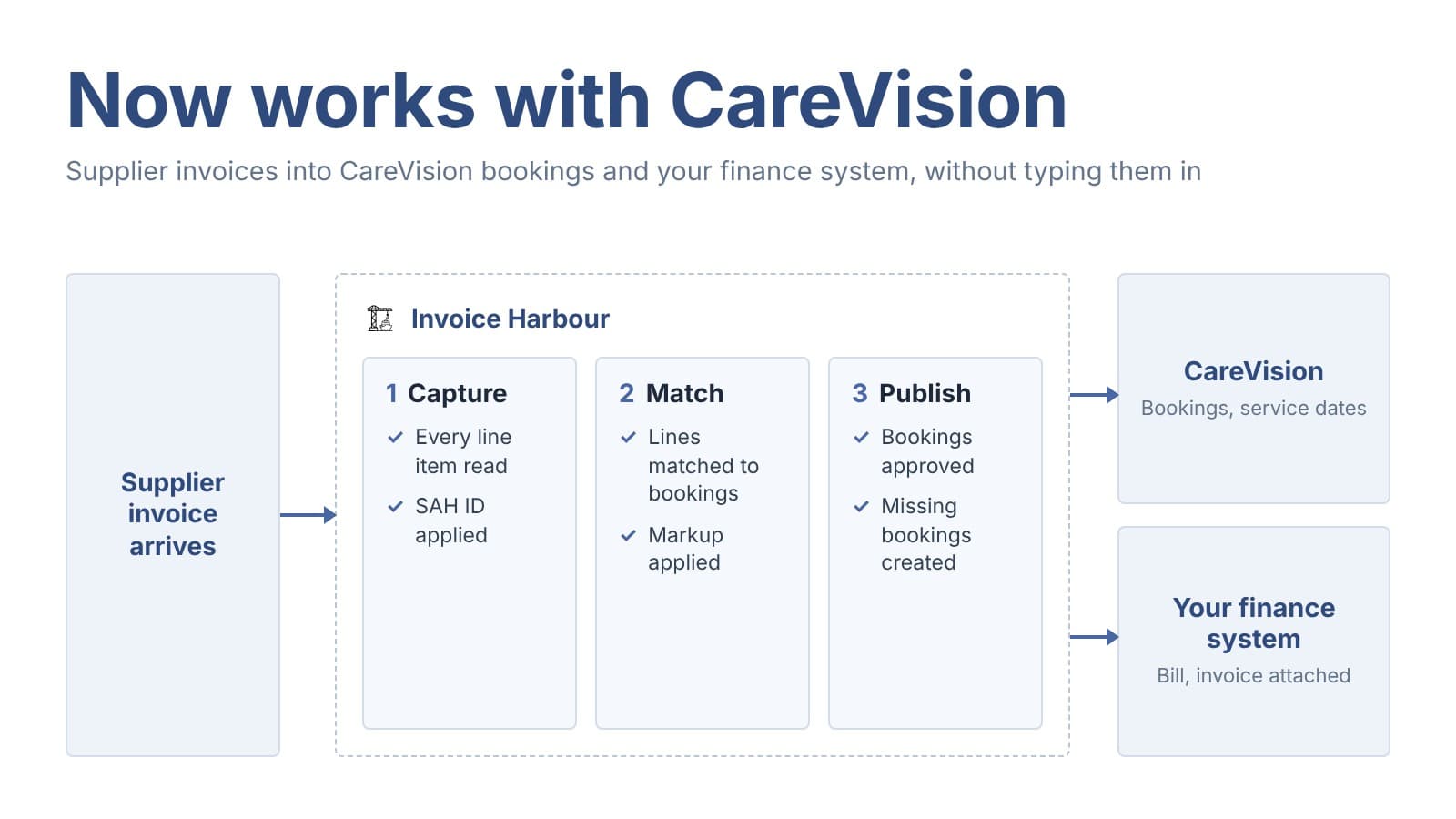
No migration. It works with the care platform and finance system you already have.
Questions about pricing methods, agreed supplier rates or the AT-HM caps? The service margins FAQ covers them.