We often see smaller providers assume the only way to process invoices is manually. Everything else looks like a big project, or built for the big providers. That is not the case.
Where the time actually goes
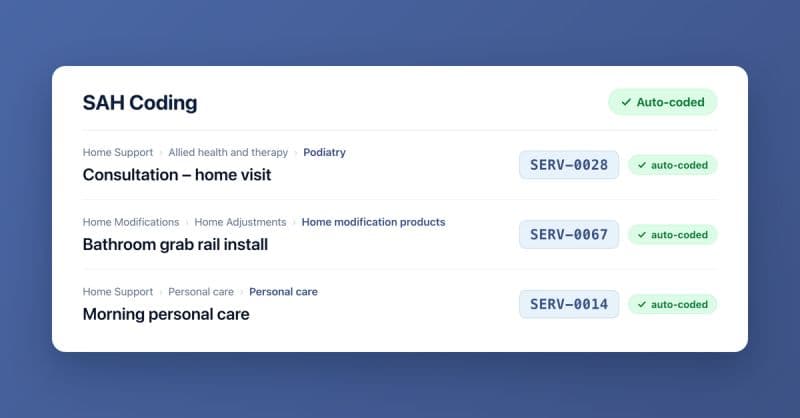
A supplier invoice for a Support at Home participant is not one number. Each line has to be matched to a service type on the Support at Home service list, because each line is what gets claimed. A podiatry visit, a grab rail install and a morning of personal care sit under different categories with different participant contribution rules, and the care platform needs every one of them coded before the claim can go through.
For a small provider that usually means someone with a spreadsheet open next to the invoice, looking up each line by hand. It works, until the invoice count grows or that person takes leave.
What Invoice Harbour does instead
- Every line is captured and coded automatically. The invoice is read line by line and each line is assigned its Support at Home service type. There is no lookup table to maintain.
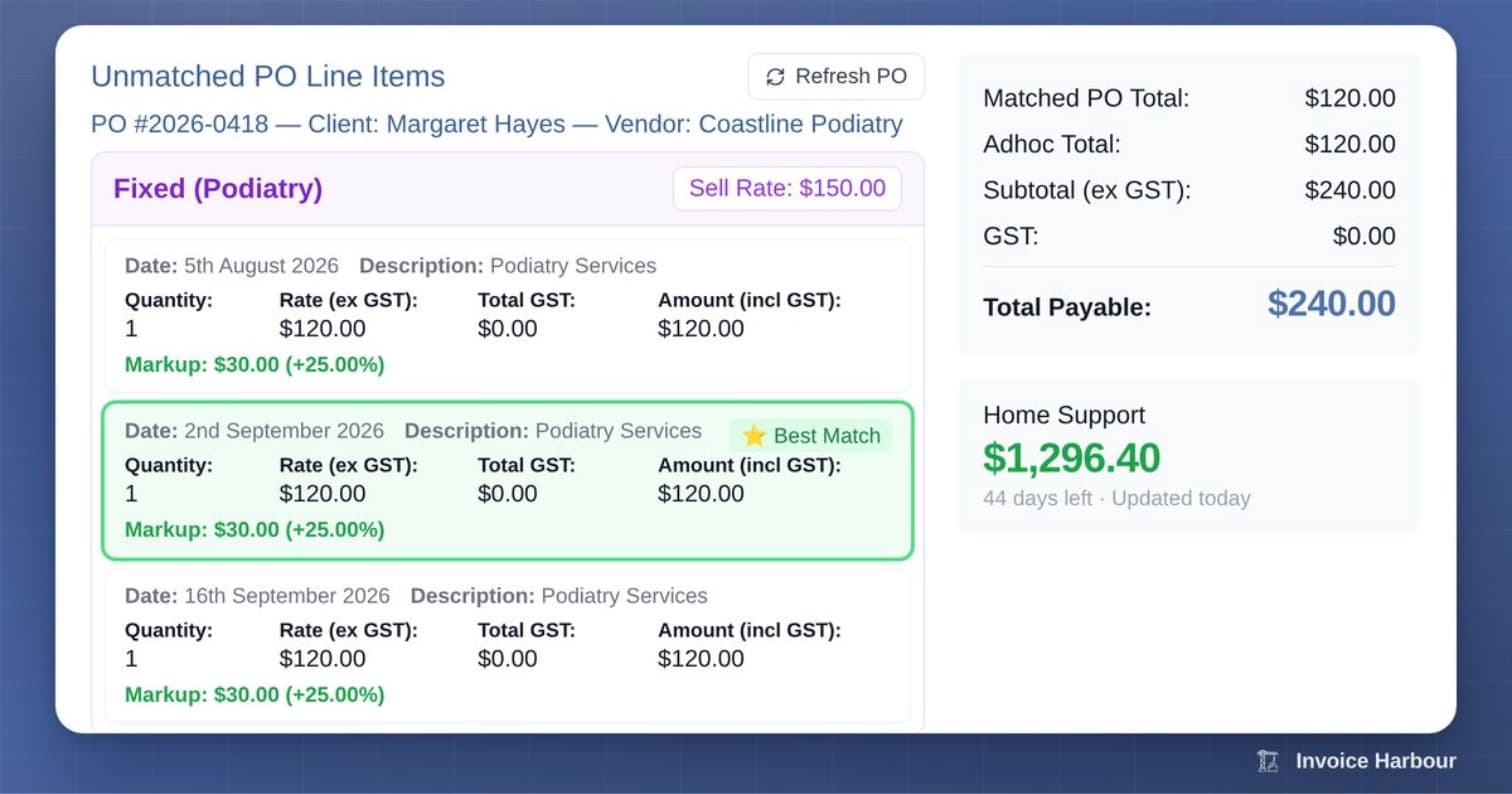
- Finance still reviews and approves. Nothing publishes until someone has looked at it. Where a purchase order exists, the invoice is matched to it during review.
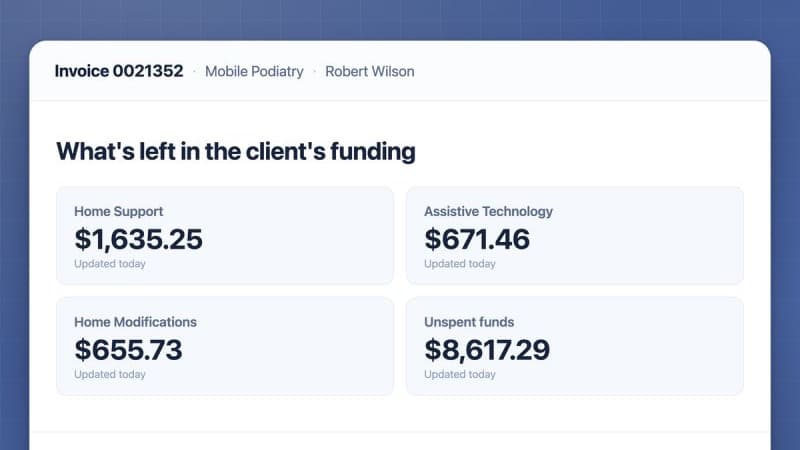
- The invoice goes back to your care platform correctly coded, against the right participant and budget, ready to claim. The finance system receives the bill to pay the supplier at the same time.
No migration
Invoice Harbour does not replace your care platform or your finance system. It connects to the ones you already run, and supplier invoices flow through it on the way to both. Setup is measured in days, not quarters, and there is no cutover.
If you are a smaller provider and have been assuming automation is out of reach, it is worth a 20-minute look.